🌑 “A lunar eclipse isn’t just a celestial shadow—it’s a sacred Ayurvedic window for fasting, cleansing, and inner transformation.”
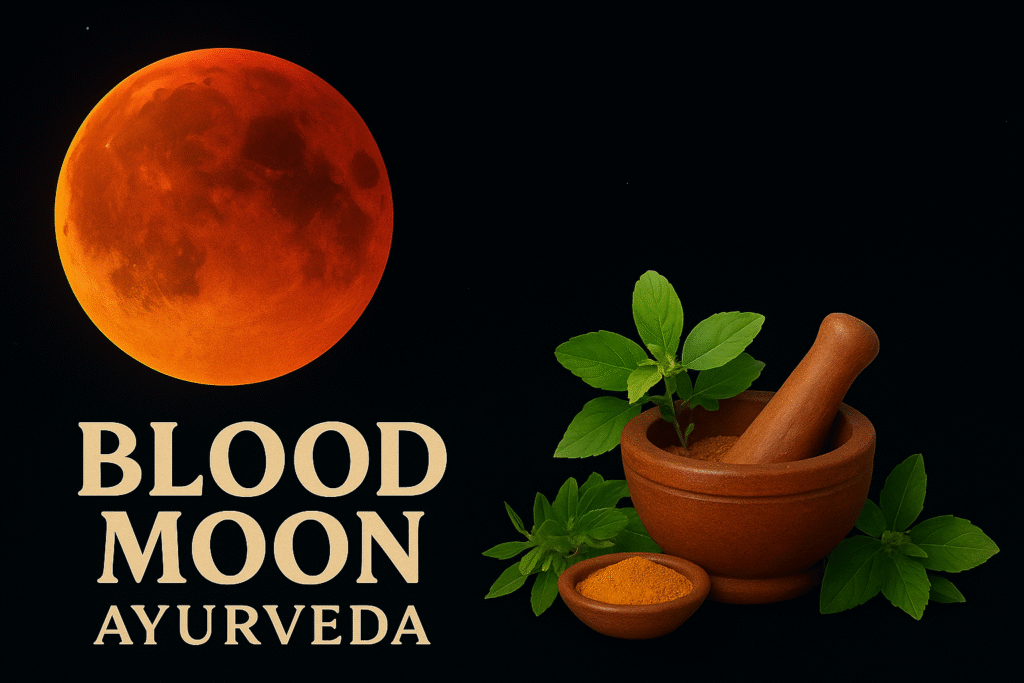
In Indian tradition, the moon eclipse (Chandra Grahan), which combines Ayurveda, astronomy, and spirituality, has long had a special position. The Total Lunar Eclipse (Blood Moon), in 2025 serves as a reminder of the age-old knowledge that has been handed down through the ages.
This celestial event isn’t only an astronomical wonder, according to Ayurvedic rituals during moon eclipses; it’s also a time to reset the body, mind, and spirit via attentive practices, fasting, and purification.
According to Ayurveda, the lunar eclipse is a delicate time when Agni (digestive fire), diminishes, making it more difficult to digest heavy or inappropriate food intake.
These customs are also being used by contemporary wellness enthusiasts as a natural detox.
Sutak Kaal restrictions, fasting guidelines, and spiritual mantras are still widely practiced.
As evidenced by media coverage and cultural conversations about them.
Ayurvedic eclipse fasting, the meaning of Sutak Kaal, dietary dos and don’ts, post-eclipse cleansing practices, and aligning with cosmic energy for best health are all covered in this guide.
Understanding Sutak Kaal and Ayurvedic Perspective
What is Sutak Kaal?
Sutak Kaal is the Vedic term for the time leading up to and during a lunar eclipse. Usually, it starts nine hours before the eclipse and lasts until it is over. Ancient writings and Ayurvedic knowledge discourage eating, cooking, and carrying out auspicious rites during this stage.
The reasoning stems from both energetic and practical concerns.
It is thought that foods cooked prior to or during the eclipse acquire bad cosmic energies, which reduces their safety for human consumption.
Since Ayurveda places a strong emphasis on purity during this period.
It is advised to fast or eat only light, sattvic meals before to the start of Sutak Kaal.

Ayurvedic View: Agni and Cosmic Impurities
According to Ayurveda, the eclipse affects the body’s Agni (digestive fire), which controls digestion and metabolism. Ama (toxins) might build up from eating heavy or stale food because Agni decreases during the moon eclipse.
For this reason, it is advised to fast or eat little before Sutak.
In addition to preventing physical indigestion, adhering to these techniques promotes mental clarity and spiritual cleansing throughout this special cosmic alignment.
The existence of cosmic impurities that could contaminate food and drink during the eclipse is another fundamental belief.
Because Tulsi is known for its antibacterial qualities and for its spiritual protection.
Ayurvedic practices advise adding Tulsi leaves to drinking water or food that has been preserved to defend against this.
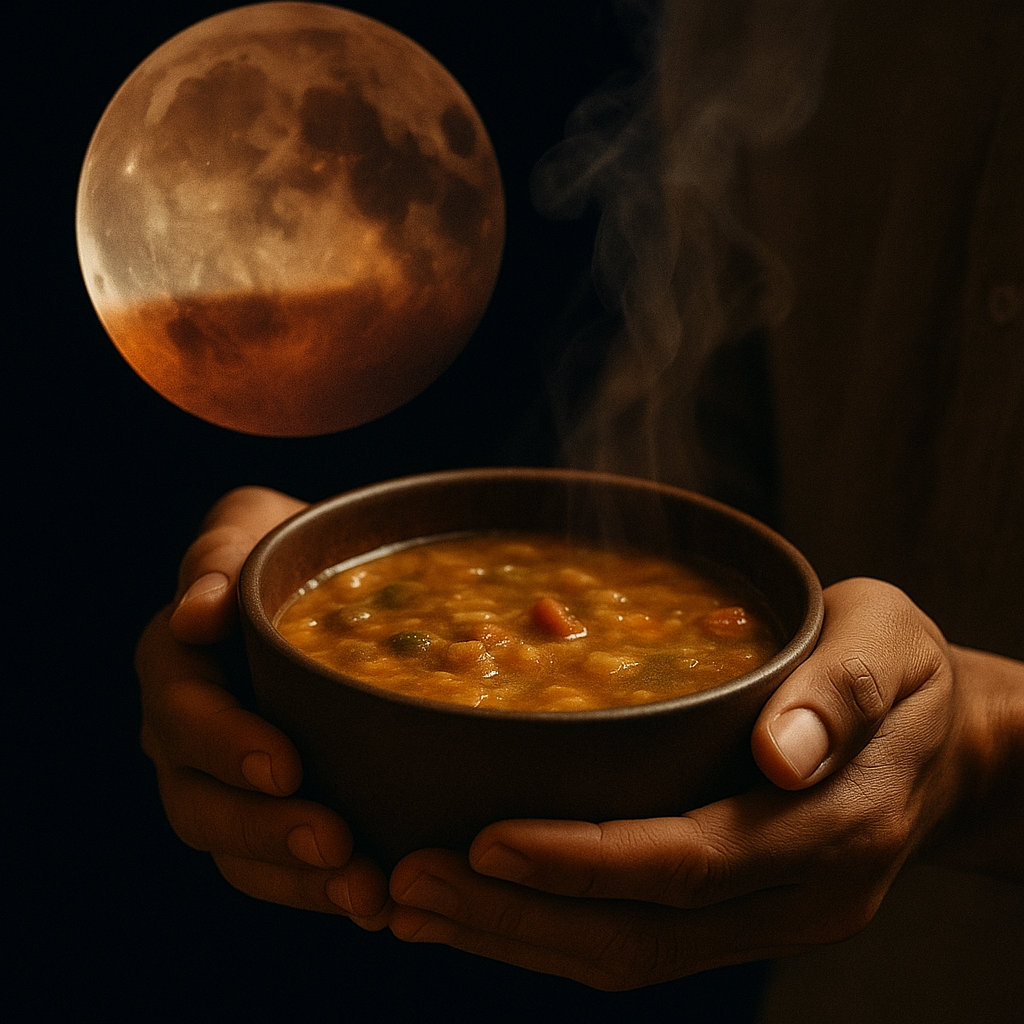
Fasting and Eating Guidelines During Moon Eclipse
Pre-Eclipse: Light Meals and Optional Fasting
According to Ayurveda, your body’s ability to adjust to the change in cosmic energy is directly impacted by the food you consume before the moon eclipse. During Chandra Grahan, large meals are more difficult to digest.
However, it may result in the production of Ama (toxins) when the Agni (digestive fire) decreases. Practitioners advise eating light sattvic foods at least two to three hours prior to the eclipse start time in order to avoid this.
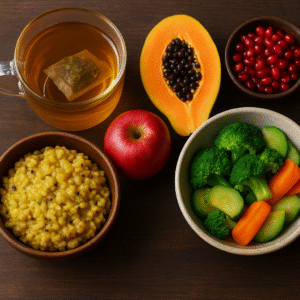
Ideal pre-eclipse meals include:
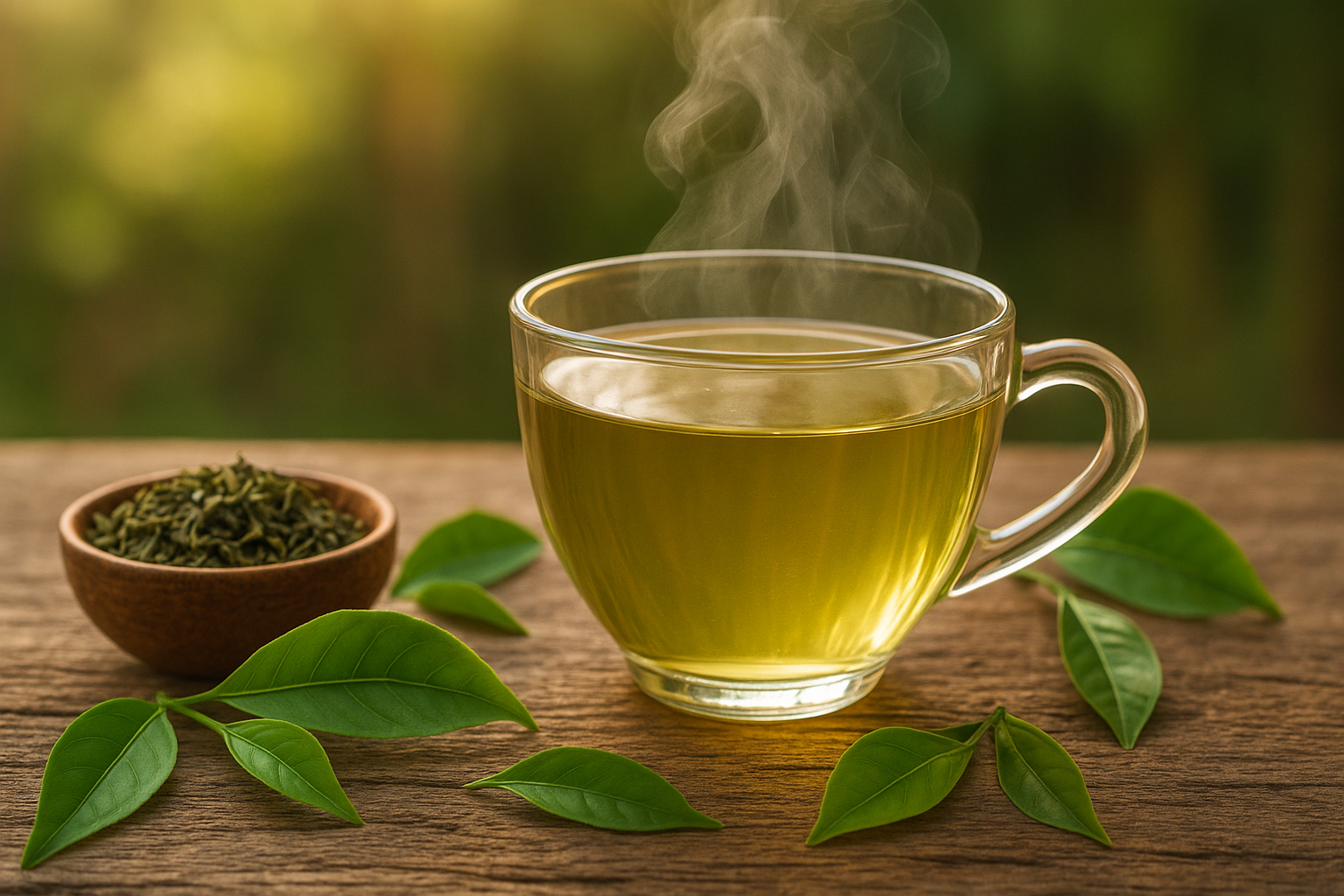
Herbal teas or warm water with a few drops of lemon
Khichdi (a light blend of rice and moong dal)
Fresh fruits like papaya, apple, or pomegranate
Steamed or boiled vegetables with mild spices
Fasting during lunar eclipse is also advised for individuals pursuing a deeper level of spiritual cleansing. Warm water or light herbal infusions are good substitutes for full fasting if you find it difficult. This helps the body get ready for spiritual activities like meditation and mantra chanting in addition to providing rest for the digestive system.
During Eclipse: No Eating or Drinking
Avoiding all food and liquids during the eclipse is one of the most effective Ayurvedic moon eclipse fasting rules.
There are two beliefs:
1.Weakened digestion: Agni is at its lowest, which causes slow digestion.
2.Cosmic influence: It is believed that small energetic changes can diminish the pranic (life force) quality of foods and beverages.
Ayurveda advocates using this holy time for mental and spiritual nourishment —through meditation, mantra chanting, or quiet introspection—instead of eating.
By doing this, you may align your body with its natural rhythms and save energy.
Use of Tulsi Leaves
Tulsi leaves (holy basil), are added to drinking water and food that has been preserved before to the eclipse as part of a special Ayurvedic practice.
In Ayurveda, tulsi is highly valued for its antimicrobial, and sattvic qualities, and antioxidant properties.
It makes both physically and spiritually purifying.
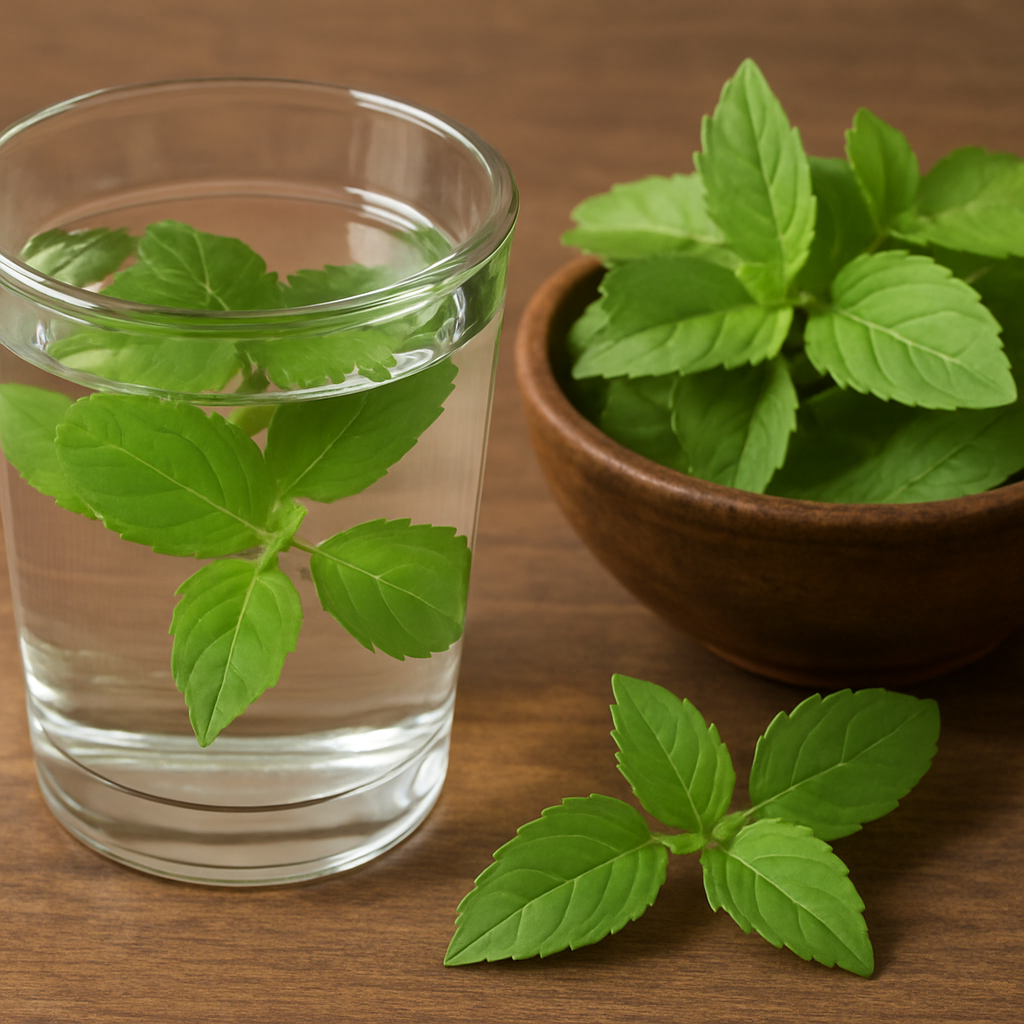
Before Sutak Kaal starts, families customarily put Tulsi leaves in containers with milk, water, and prepared food. It is thought that this straightforward yet effective action can neutralize cosmic impurities and stop contamination. Tulsi guarantees that stored water keeps its vitality and purity, even if the food is later thrown out following the eclipse.
This approach embodies the holistic philosophy of Ayurveda, which holds that food contains subtle energy that should remain clean during celestial events in addition to serving as physical nourishment.
Spiritual Practices During Eclipse
Mantras and Meditation
During Chandra Grahan, eating is discouraged, however Ayurveda suggests nourishing the mind and spirit with good energy. Because the cosmic energy is at its peak mantras during lunar eclipse, it is believed that chanting sacred mantras will increase their power.
Some widely recommended mantras include:
- Maha Mrityunjaya Mantra – for healing, protection, and overcoming fear.
- Gayatri Mantra – for mental clarity and spiritual illumination.
- Chandra Grahan Mantra – specifically recited during lunar eclipses for peace and balance.
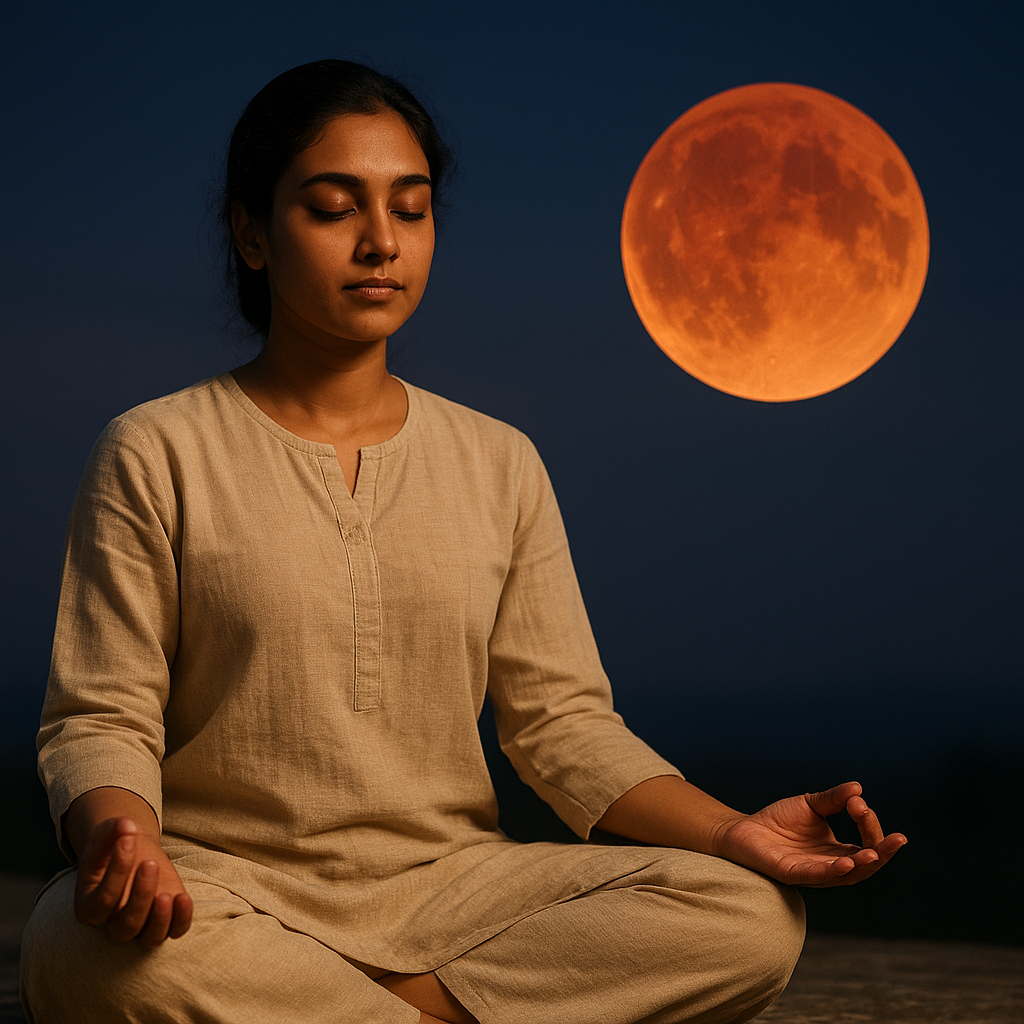
Meditation is regarded as extremely auspicious meditation during moon eclipse, in addition to chanting.
The mind can be calmed and inner energy balanced by sitting quietly in a comfortable position, paying attention to your breathing, or doing japa (repetition of mantras with mala beads).
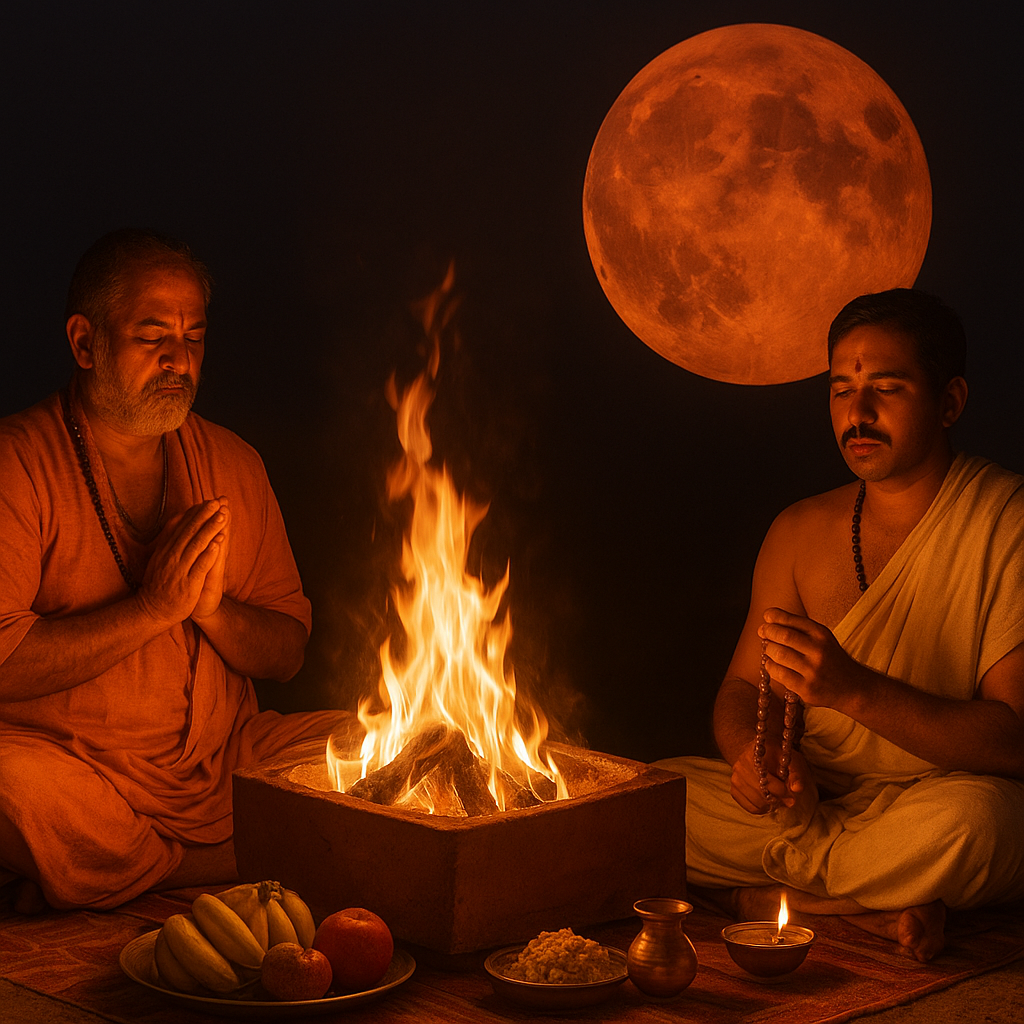
This supports the aim of Ayurveda, which is to balance Satva (purity and clarity), enabling spiritual development even during periods of cosmic upheaval.
Embrace Silence and Inward Focus
Both Vedic and Ayurvedic literature emphasise the need of making a Mauna Vrata (vow of silence) during eclipses. Silence during the lunar eclipse helps preserve prana (life force) and avoid needless mental distractions because it is thought to cause emotional and mental instability.
Instead of engaging in worldly discussions or distractions, people are advised to:
- Practice mindful silence
- Read sacred texts like the Bhagavad Gita or Ramcharitmanas
- Engage in self-reflection and journaling after meditation
- Direct thoughts inward, focusing on personal growth and gratitude
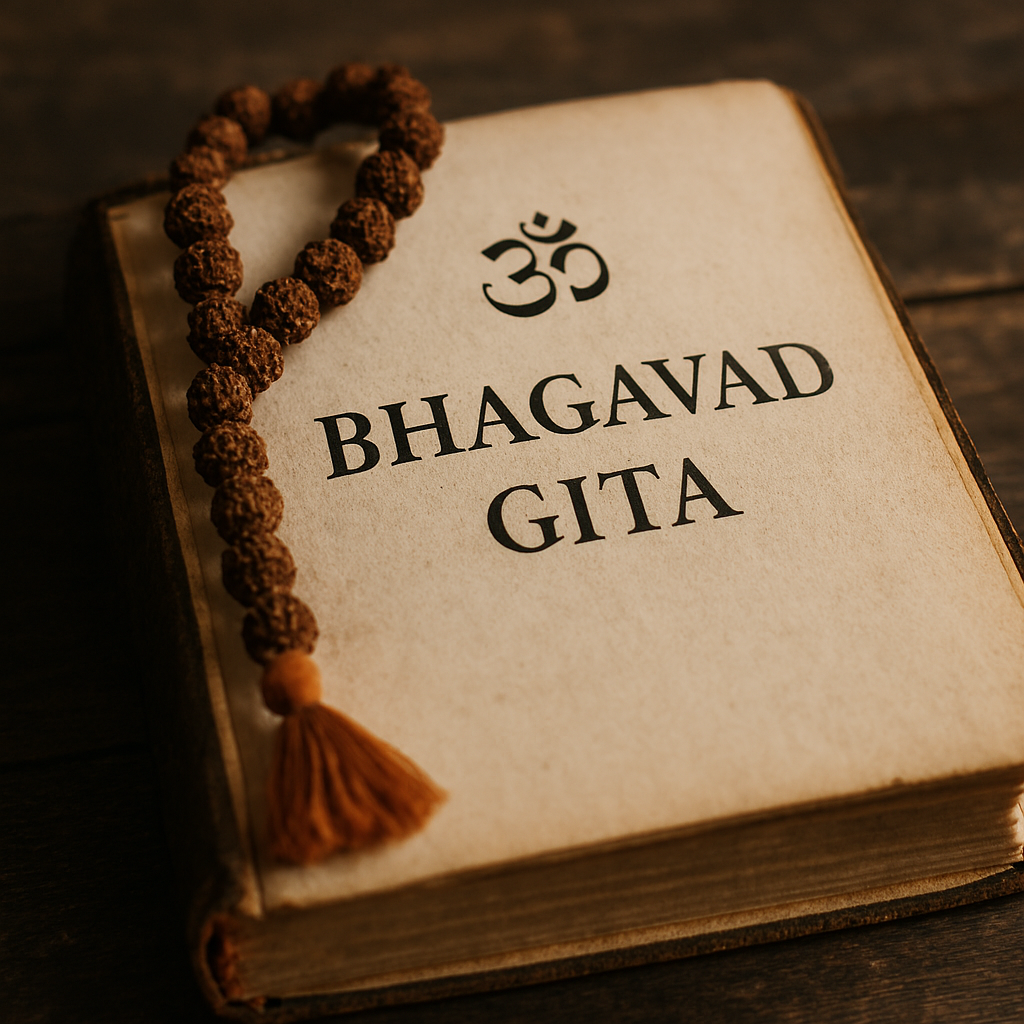
During an eclipse, silence is viewed as presence rather than absence—a chance to re-establish a connection with one’s higher self. For this reason, a lot of spiritual seekers think that Grahan is when they have their most profound meditations and epiphanies.
Post-Eclipse Cleansing and Diet
Ritual Bath (Snana)
To get rid of any residual bad energy, Ayurveda suggests taking a ritual bath (Snana) once the moon eclipse (Chandra Grahan) is over.
This activity is not merely symbolic; it aids in body renewal and doshas balancing.
In the past, taking a bath in a river was advised.
However, nowadays, a warm bath infused with neem leaves, tulsi leaves, or a few drops of essential oils works just as well.

Both tulsi and neem are perfect for cleansing after Sutak Kaal.
Because of its antibacterial, antifungal, and purifying properties.
Additionally, a post-eclipse bath helps restore the body’s natural rhythm, enhance circulation, and soothe the psyche.
Discarding Pre-Eclipse Cooked Food
Food made before or during the eclipse is severely discouraged by Ayurvedic practice.
After the eclipse is over, such food should be thrown out since it is said that cosmic influences cause it to lose its pranic energy (life force).
Rather, as soon as the eclipse is over, fresh meals should be prepared.
Unless covered with tulsi leaves, even water that is kept during Sutak is frequently thrown out.
The Ayurvedic emphasis on food purity and sattva guna (clarity, lightness, balance) is reflected in this practice.
By doing this, one not only steers clear of any potential gastrointestinal issues but also metaphorically releases any unpleasant or stale energies connected to the eclipse.
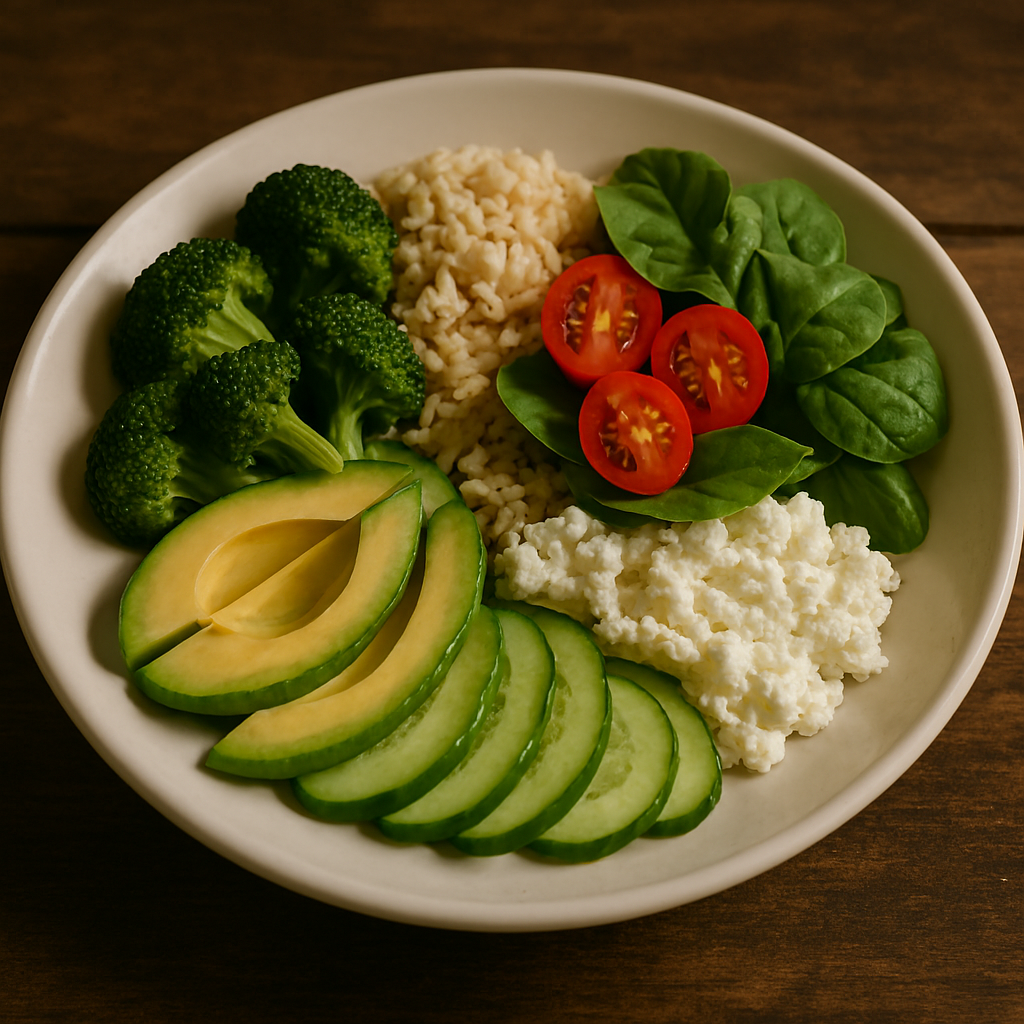
Post-Eclipse Diet: Light and Detoxifying
Always break the eclipse fast in a way that is easy on the stomach. Light, sattvic, and detoxifying foods that are easy to digest and replenish energy are recommended by Ayurveda since Agni (digestive fire) needs to be rekindled after hours of slumber.
Ideal post-eclipse meals include:
- Moong dal khichdi (light and nourishing)
- Steamed vegetables with mild spices like cumin and turmeric
- Warm herbal teas such as tulsi, ginger, or fennel tea to support digestion
- Triphala water to detoxify and clear Ama (toxins)
- Fresh fruits like papaya or banana for gentle nourishment
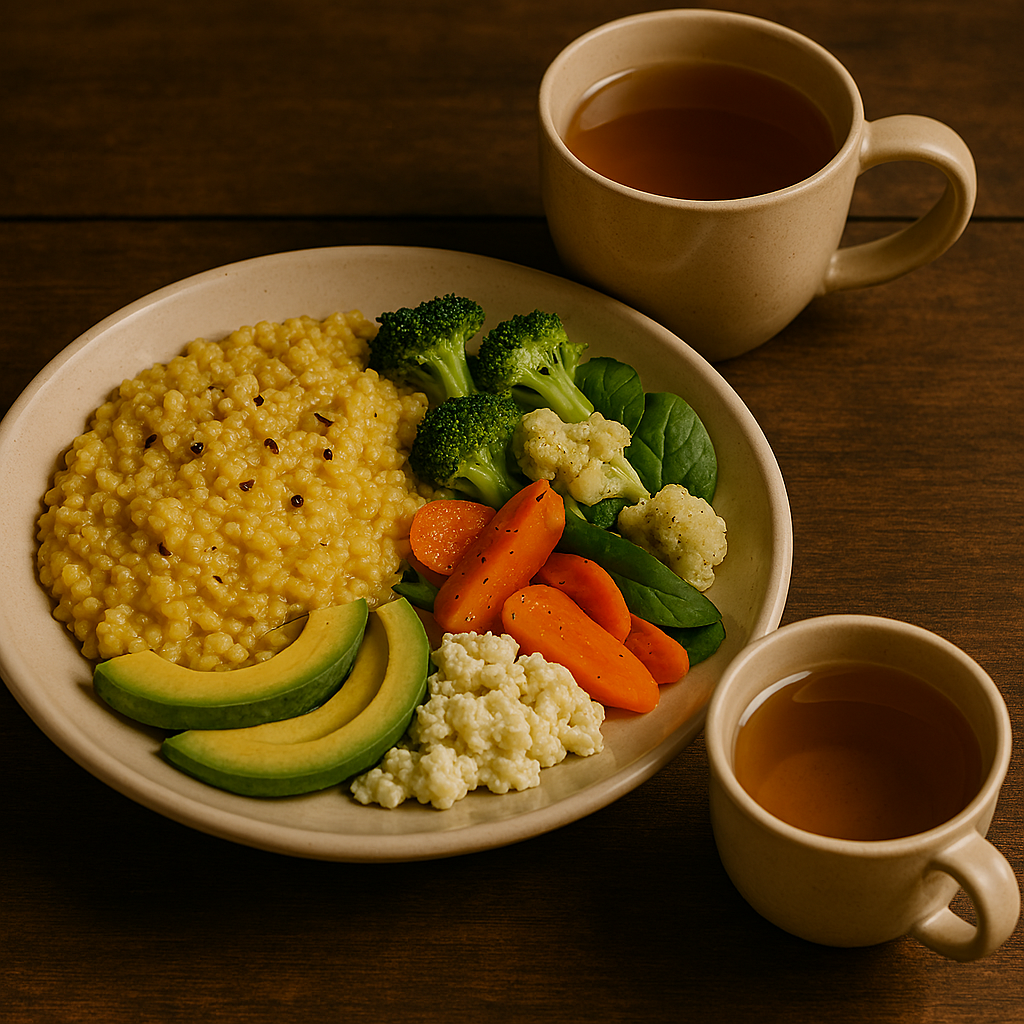
Foods that are heavy, greasy, fried, or overly spicy should be avoided just after the eclipse since they can cause digestive overload. rebuilding digestive strength naturally while preserving sattvic balance should be the main goal.
Scientific Perspective: Myth vs. Reality
Ayurvedic ceremonies and cultural beliefs have traditionally surrounded the moon eclipse (Chandra Grahan). Although food limitations, bathing, and fasting have spiritual significance, contemporary science provides an alternative viewpoint. Knowing both viewpoints enables readers to respect tradition while making well-informed decisions.
Do Eclipses Really Affect Food?
According to Ayurvedic scriptures, eclipses cause cosmic influences to contaminate food and drink. However, Modern science explains that eclipse itself does not spoil food or water. Food is not contaminated by the moon’s energy or direct radiation.
Fasting: Spiritual Belief or Biological Benefit?
However, Ayurveda’s recommendation to make discarding pre-eclipse food and cooking fresh meals is consistent with appropriate hygiene and freshness procedures. Symbolically throwing away old food also promotes mindful eating and detox habits.
Impact on Pregnant Women and Energy Levels
Pregnant women are frequently advised by cultural beliefs to avoid eclipse exposure. There is no scientific proof that the mother or kid is harmed directly by the moon eclipse.
However, because Ayurveda believes that subtle cosmic energies may affect sensitive states, it cautions against doing so.
Experts in contemporary wellness view this as a chance for expectant mothers to rest, meditate, and avoid unnecessary stress.
Steer clear of needless tension, all of which are advantageous regardless of astronomical occurrences.

Finding the Balance: Tradition Meets Science
The psychological and spiritual impact of rituals are not diminished by science, even though it may reject some eclipse-related superstitions. Techniques that encourage mindfulness, stress reduction, and holistic wellness include silent meditation, mantra chanting, fasting, and cleansing baths.
Therefore, it is essential to take a balanced approach: honour the Ayurvedic rituals during moon eclipse for their spiritual and cultural significance while also acknowledging the modern scientific perspective that validates some customs and reinterprets others.
Call to Action (CTA)
More than just a celestial occurrence, the moon eclipse (Chandra Grahan) offers an opportunity to rejuvenate your body, mind, and soul. By adhering to Ayurvedic rituals during moon eclipse, such as fasting, Sutak Kaal limitations, and post-eclipse cleansing, you embrace contemporary wellness advantages while aligning yourself with ageless wisdom.
Now it’s your turn!
- Do you follow any Ayurvedic eclipse fasting rules or rituals in your family?
- Have you tried meditation or mantra chanting during an eclipse?
💬 Share your experiences or questions in the comments below.
📩 Want more? Subscribe to our newsletter and get exclusive monthly Ayurvedic guides aligned with celestial events—plus a free downloadable “Moon Eclipse Ritual Checklist” with:
- Pre-eclipse diet tips
- Mantras and meditation practices
- Post-eclipse cleansing steps
✨ Stay connected with Ayurveda, align with cosmic rhythms, and bring balance into your lifestyle—one celestial event at a time.
FAQs
1. Can we eat during moon eclipse according to Ayurveda?
Ayurveda recommends avoiding food during the eclipse because Agni (digestive fire) weakens, making digestion sluggish. Instead, light sattvic meals should be taken before Sutak Kaal begins, and fresh food should be prepared after the eclipse.
2. What is Sutak Kaal and why is it important?
Sutak Kaal is the period that begins about 9 hours before the lunar eclipse and lasts until it ends. Ayurveda and tradition advise avoiding cooking, eating, or performing auspicious rituals during this time to maintain purity and protect digestive health.
3. What should we eat before the eclipse?
Before Sutak Kaal, eat light sattvic foods such as:
- Moong dal khichdi
- Fresh fruits (papaya, pomegranate, apple)
- Herbal teas (tulsi, ginger, fennel)
These foods are easy to digest and support balanced energy.
4. Why do people put Tulsi leaves in food and water during eclipse?
Tulsi (holy basil) is considered sacred in Ayurveda and has antimicrobial properties. Adding Tulsi leaves to stored water or food during the eclipse is believed to protect against cosmic impurities and preserve purity.
5. Can pregnant women go outside during lunar eclipse?
Tradition advises expectant mothers to stay indoors, rest, and avoid looking directly at the eclipse. Scientifically, there is no proven harm, but Ayurveda views this as a period to maintain calm, meditate, and protect mental-emotional health.
6. What are the benefits of fasting during lunar eclipse?
- Resting the digestive system
- Detoxifying the body and clearing Ama (toxins)
- Improving focus through mantra chanting and meditation
- Supporting spiritual and emotional balance
7. What should we do after the eclipse ends?
- Take a ritual bath (Snana) with neem or tulsi-infused water
- Discard food prepared before or during eclipse
- Prepare fresh sattvic meals like khichdi, fruits, and herbal teas
- Practice gratitude and meditation for renewal