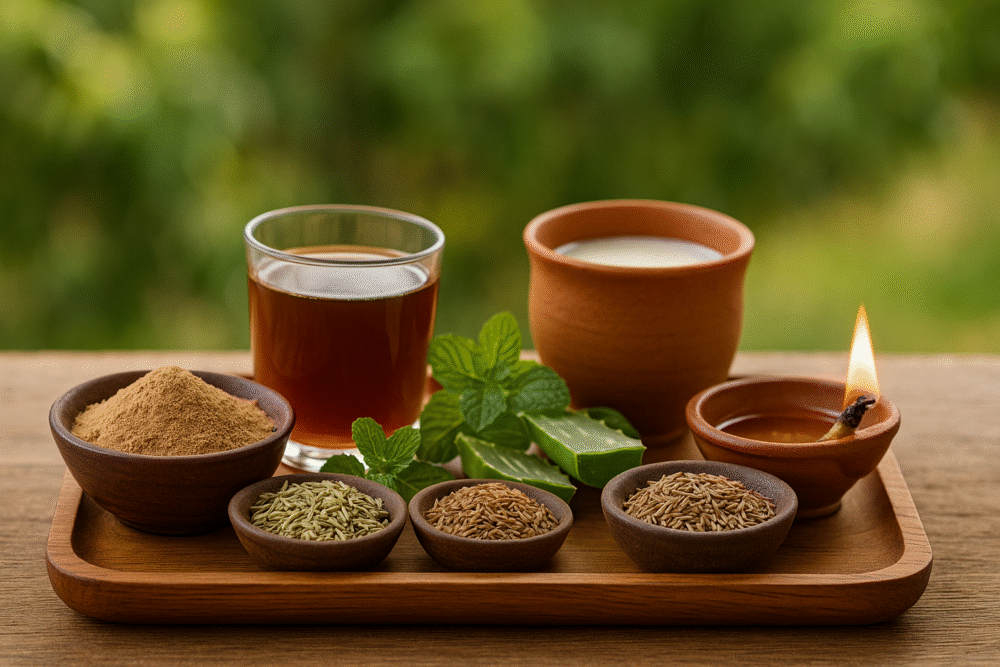
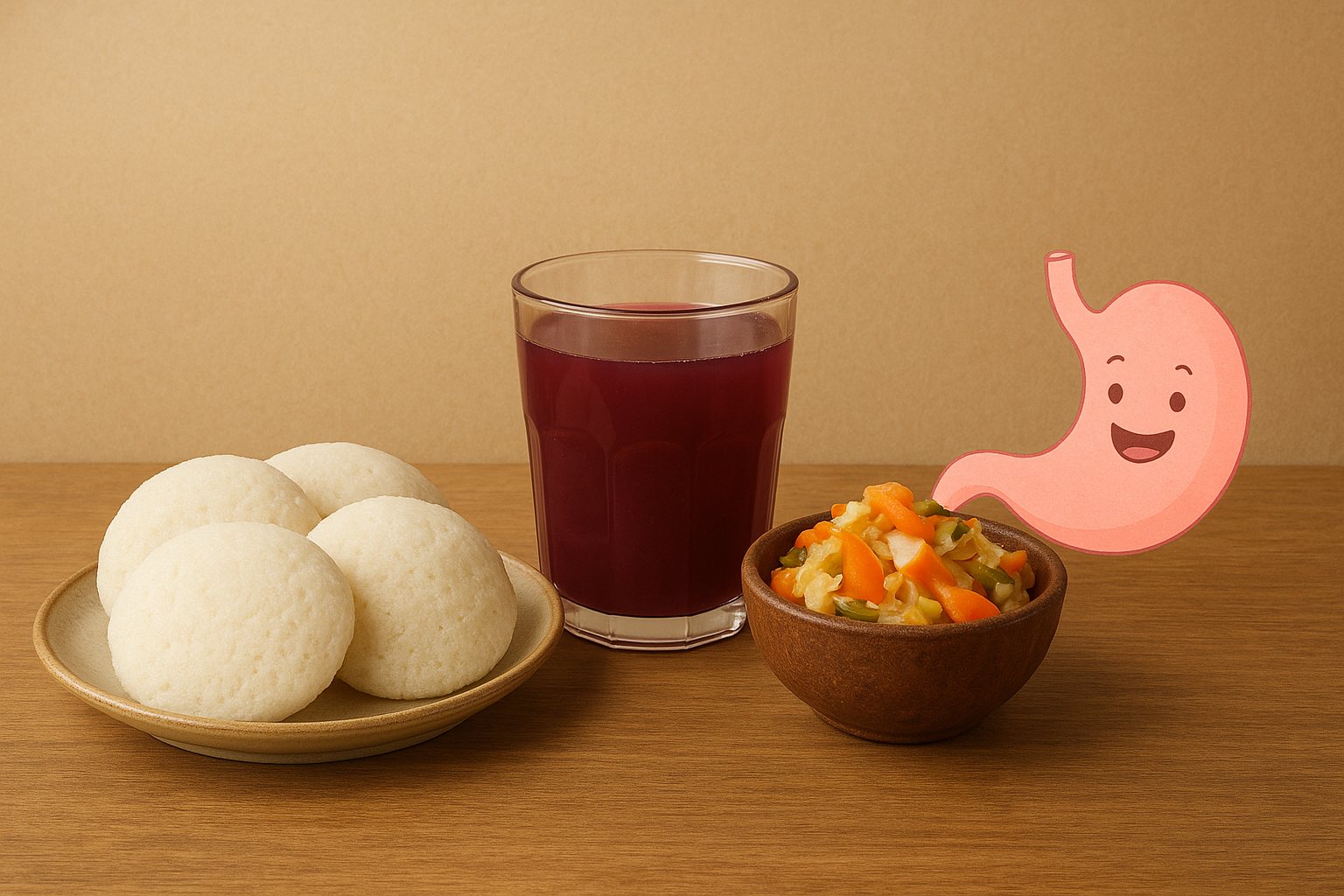
“Bloated after every meal? Ayurveda hides 7 herbs that can change that.”
Digestive troubles like indigestion, bloating, and constipation are common in India, especially after heavy meals, during festivals, or in the monsoon season. Stress, irregular eating, and modern lifestyle habits only worsen these discomforts. According to Ayurveda, all such problems arise due to weakened digestive fire (Agni) and the buildup of Ama (toxins) in gut, which disturb the balance of Vata and Pitta doshas.
Fortunately, ancient wisdom offers safe and natural solutions. In this guide, you will discover the 7 best Ayurvedic herbs for digestion, along with their role as herbs for constipation, herbs for bloating, and herbs for indigestion. You’ll also learn practical usage tips, safe dosages, and simple lifestyle changes that support gut health.
Understanding Indigestion, Bloating & Constipation in Ayurveda
1. What Ayurveda Says: Agni, Ama & Dosha Imbalance
Ayurveda places digestion at the core of wellness.
A strong Agni ensures food is digested and nutrients absorbed properly.
When Agni weakens, Ama or undigested food toxins accumulate in the stomach and intestines, leading to heaviness, sluggishness, and discomfort.
- Vata imbalance causes constipation, gas, and dryness.
- Pitta imbalance results in acidity, burning, and heartburn.
- Kapha imbalance slows metabolism and leads to bloating or water retention.

2. Symptoms & Triggers in Indian Lifestyle
Daily habits often weaken Agni—such as overeating, oily and fried foods, irregular mealtimes, or eating stale packaged items.
The monsoon and winter seasons naturally slow down metabolism, making bloating and gas worse.
Common signs include flatulence, abdominal discomfort, irregular bowel movements, and heaviness after meals.
Ayurvedic herbs and Ayurvedic remedies for gas & bloating help counter these issues by restoring balance.

The 7 Best Ayurvedic Herbs: How They Help & How to Use Them
7 Best Ayurvedic Herbs
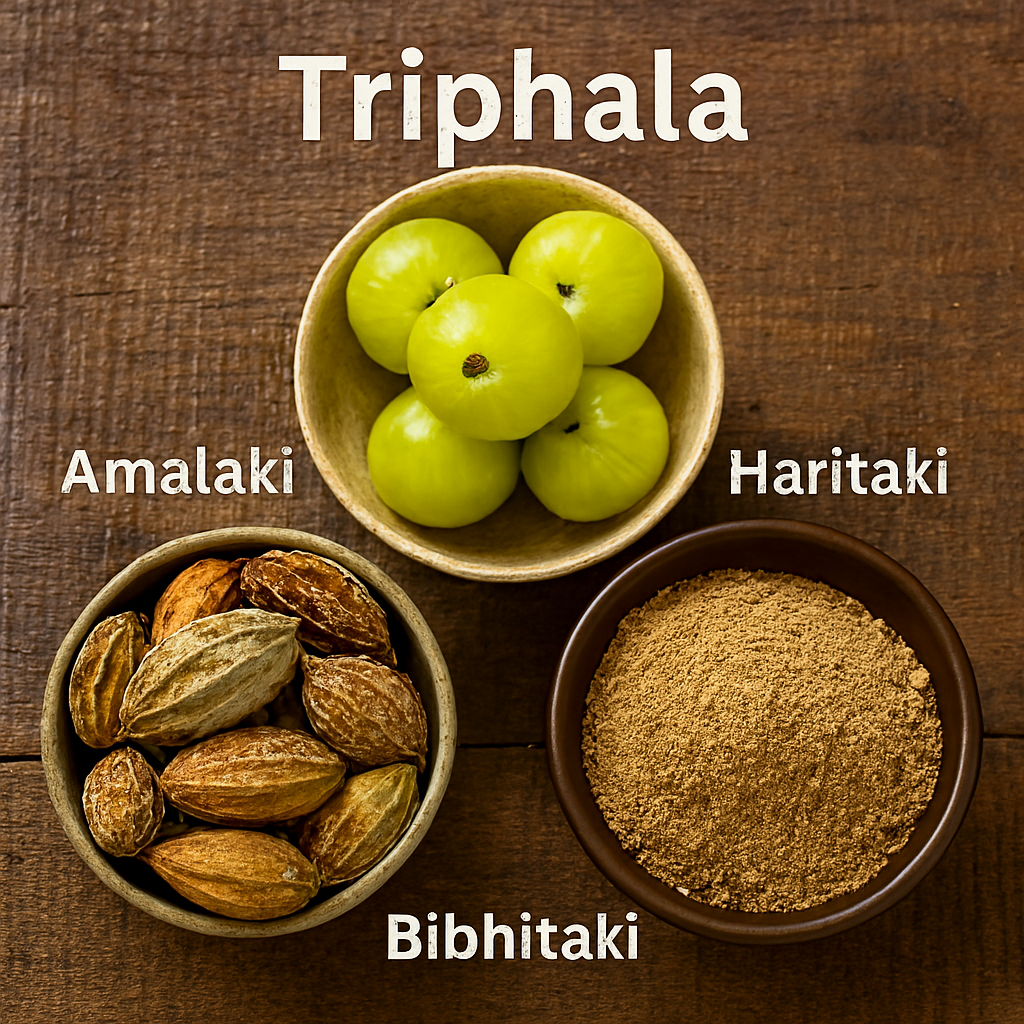
1. Triphala (Amalaki + Haritaki + Bibhitaki): Triphala is one of the most famous Ayurvedic herbs for constipation and gut cleansing. It combines three fruits: Amalaki (rich in Vitamin C), Haritaki (mild laxative), and Bibhitaki (balances Kapha).
- Benefits: Gentle laxative action, clears toxins, improves nutrient absorption. Helps with sluggish bowels and mild acidity.
- How to use: 1 tsp Triphala powder with warm water before bed. Available as churna, tablets, or capsules.
- Caution: Avoid excess; too much may cause loose motions.
- It also fits best Ayurvedic herbs for constipation acid reflux and bloating.
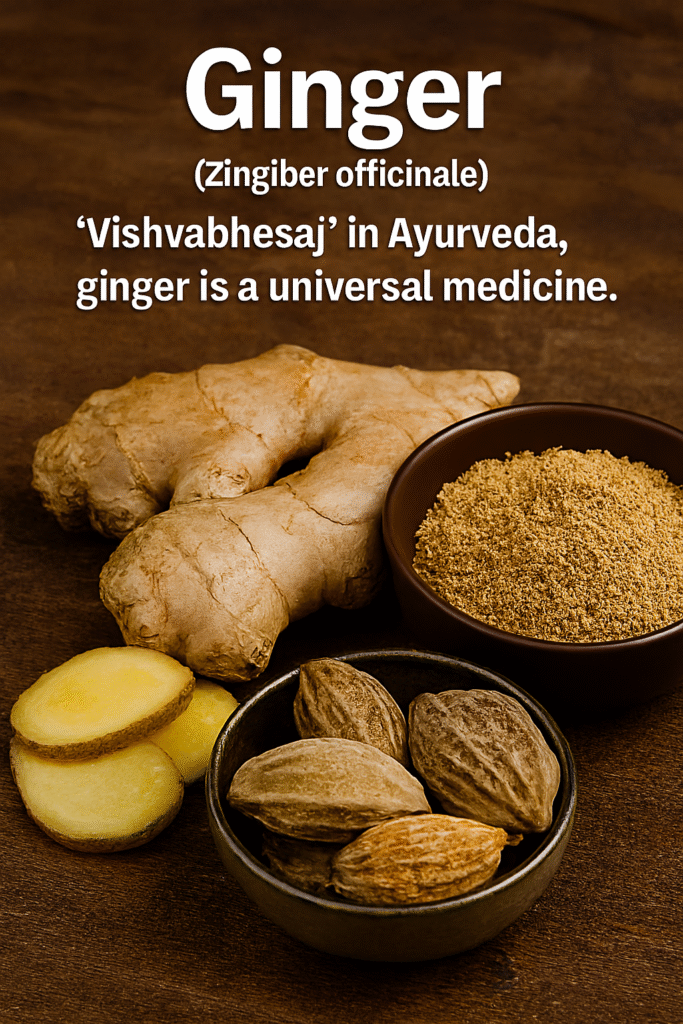
2. Ginger (Zingiber officinale): Called “Vishvabhesaj” in Ayurveda, ginger is a universal medicine and know all remedy recipes if ginger here. It is one of the best herbs for indigestion because it warms the stomach, stimulates digestive juices, and reduces bloating. Modern studies confirm its ability to enhance gastric emptying and reduce inflammation.
- Benefits: Relieves gas, improves circulation, soothes cramps, and is an excellent carminative herb.
- How to use: Drink fresh ginger tea, add grated ginger in curries, or use ginger powder in warm water. Even candied ginger works as a travel remedy.
- Caution: Avoid excess if you already have high Pitta (acidity).
- It also fits home herbal remedies for indigestion bloating gas.

3. Fennel Seeds (Saunf) & Cumin (Jeera): Two staple spices often chewed after meals in India; fennel and cumin are mild yet powerful Ayurvedic herbs for digestion.
- Fennel: Carminative, eases gas, relieves bloating, and cools Pitta.
- Cumin: Stimulates digestive enzymes, prevents indigestion, and reduces heaviness.
- How to use: Roast and chew after meals, steep in warm water, or add to herbal teas.
- These are time-tested Ayurvedic remedies for gas & bloating and work well even for children.
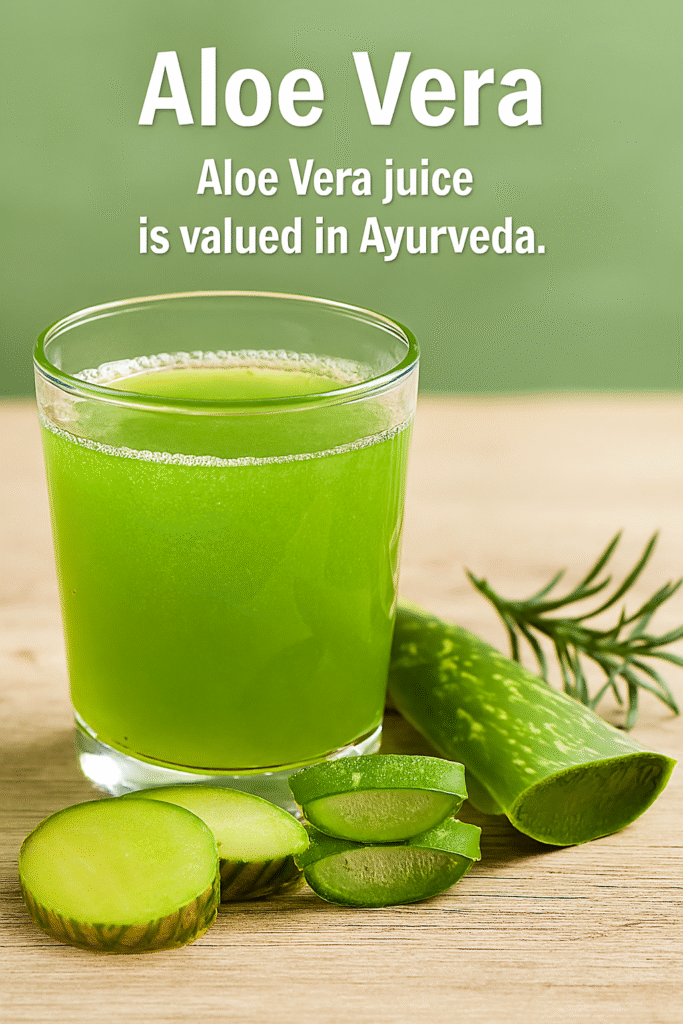
5. Aloe Vera: Aloe Vera juice is valued in Ayurveda for mild constipation relief herbal properties.
- Benefits: Soothes the gut lining, lubricates bowels, and promotes easy elimination. Also cools excess Pitta.
- How to use: 15–30 ml pure aloe vera juice on an empty stomach in the morning. Aloe gel can be mixed in smoothies.
- Caution: Avoid during pregnancy or in severe diarrhea.
- It supports Ayurvedic herbs for sluggish digestion in monsoon/rains.

4. Turmeric (Haldi): A powerful anti-inflammatory spice, turmeric supports digestion by calming the stomach lining and reducing acidity. Ayurveda calls it “deepana”—an herb that kindles Agni. It isone of the best herbs to ease digestive disorders.
- Benefits: Improves gut motility, reduces Ama, supports liver detoxification, and helps with supporting gut motility.
- How to use: Add turmeric in cooking, prepare turmeric milk, or sip turmeric tea. Golden paste with black pepper enhances absorption.
- Caution: Use in moderation if prone to high Pitta heat.
- This makes it one of the best herbs to ease digestive disorders.
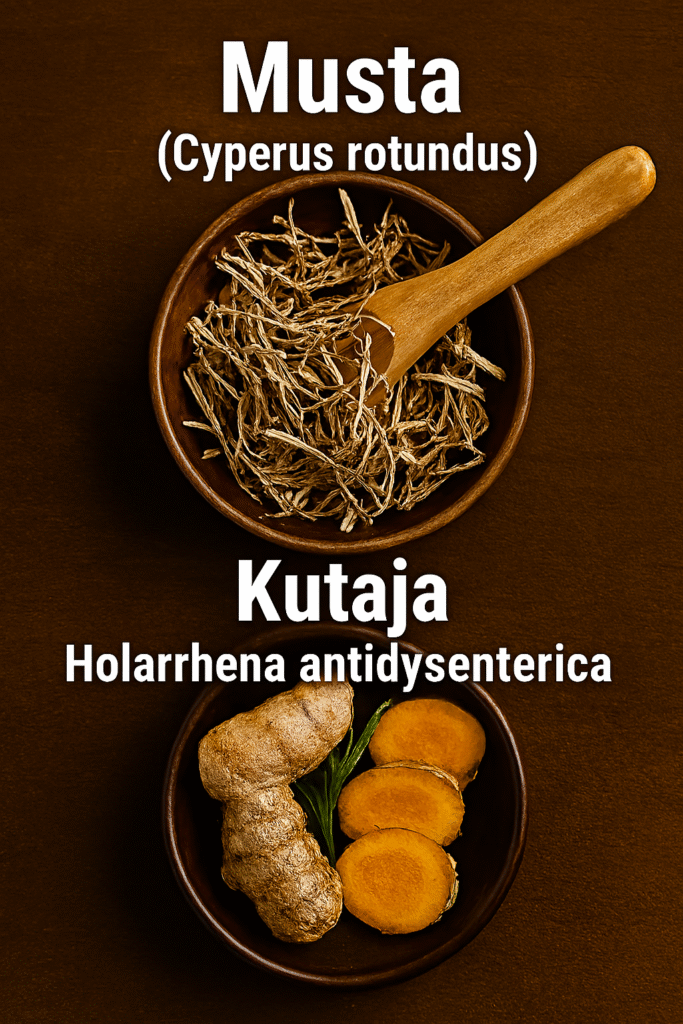
6. Musta (Cyperus rotundus) & Kutaja (Holarrhena antidysenterica): These classical herbs are lesser known but effective for natural herbs indigestion India.
- Musta: Regulates bowel movement, reduces abdominal colic, useful for both constipation and bloating.
- Kutaja: Traditionally used for diarrhea, but in mild doses it balances gut flora and reduces flatulence.
- How to use: Available in churnas or decoctions under Ayurvedic guidance.
- Together, they balance Vata/Kapha, supporting smooth digestion.
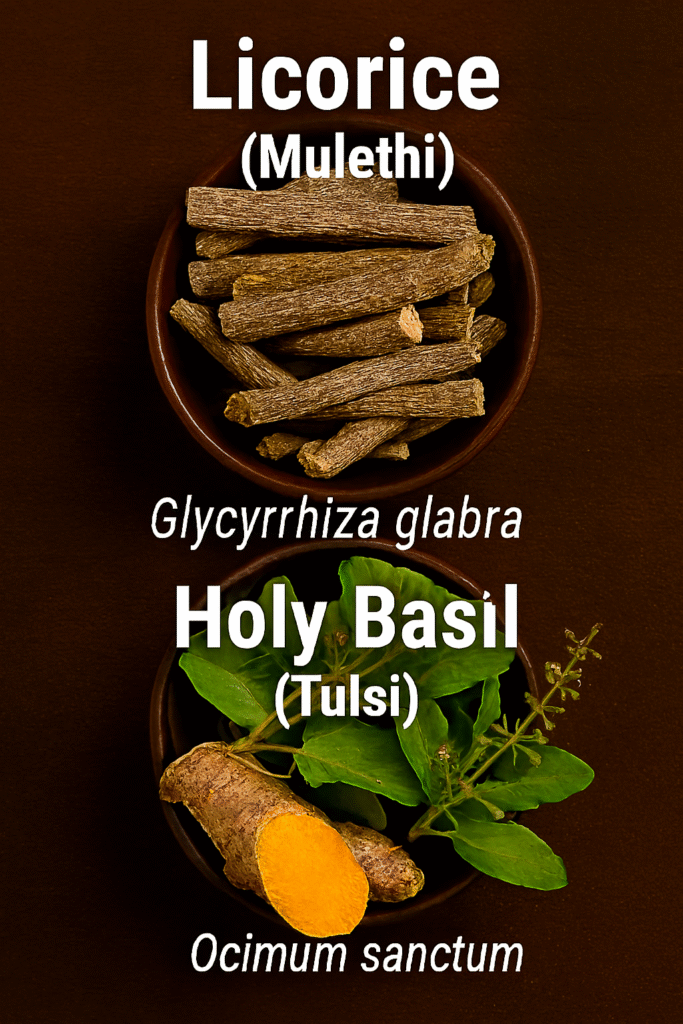
7. Licorice (Mulethi) / Holy Basil (Tulsi): Both herbs provide soothing support for herbs for indigestion.
- Licorice (Mulethi): Reduces acidity, protects gut lining, and relieves gastritis. Should be avoided due to high blood pressure.
- Tulsi (Holy Basil): Carminative, anti-inflammatory, helpful in bloating, mild indigestion, and gas.
- They can be combined in teas for home herbal remedies for indigestion bloating gas.
How to Combine & Use These Herbs Safely
- Best timing: Triphala at night, fennel tea after meals, ginger before meals.
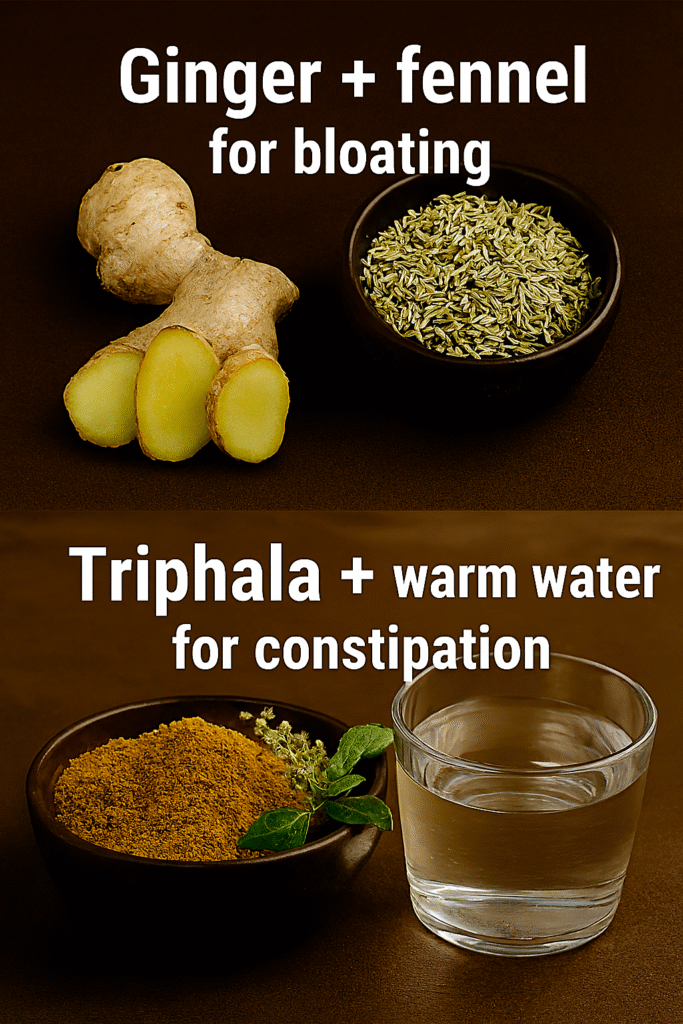
- Combinations: Ginger + fennel for bloating, Triphala + warm water for constipation.
- Forms: Powders, teas, decoctions, or capsules.
- Caution: Pregnant women, children, or people with chronic diseases should consult a doctor first.
- Persistent problems need medical guidance rather than only herbal laxatives.
Lifestyle, Diet & Habit Tips to Support These Herbs
Herbs work best when supported by diet and lifestyle:
- Diet: Warm, cooked meals; avoid excess fried, cold, or processed food. Chew well and eat at regular times.
Hydration: Sip warm water or herbal teas; avoid chilled drinks. - Movement: Light yoga like Pawanmuktasana or Vajrasana, and short walks after meals support gut motility.
- Stress management: Practice mindful eating, meditation, and ensure adequate rest, since stress weakens Agni.

When to See a Doctor & Red Flags
While Ayurvedic herbs for bloating and constipation are highly effective, medical care is essential if:
- Constipation or indigestion lasts more than a week.
- Severe abdominal pain, blood in stool, or sudden weight loss occurs.
- Dehydration, persistent vomiting, or fever is present.
Remember, some herbs may interact with medicines, so consult both an Ayurvedic and medical practitioner if you’re on treatment.

Summary
Digestive troubles like constipation, bloating, and indigestion can be managed naturally with the 7 best Ayurvedic herbs for digestion. Triphala, ginger, fennel, cumin, turmeric, aloe vera, licorice, tulsi, and classical herbs like Musta help restore balance to Agni, reduce Ama buildup, and ease gut motility.
Start with 1–2 remedies that suit your constitution, combine them with warm meals, yoga, and hydration, and observe the difference.
Call to Action: Try these herbs safely at home, share your experiences, and consult an Ayurvedic expert if symptoms persist.
FAQ
Q1. What is the best herb for constipation relief?
Triphala is the most recommended for mild constipation, while aloe vera juice also helps.
Q2. Can Triphala help with bloating and indigestion?
Yes, it works as a gentle cleanser that improves overall digestion.
Q3. Are herbal remedies safe for children/pregnancy?
Mild herbs like fennel are safe in small amounts, but always consult an expert.
Q4. How long does it take to see improvement?
With daily use, many people see relief in 3–7 days, though chronic issues may take longer.