Glow naturally with the Ayurvedic power of Neem, Amla, and Turmeric.
In India, the struggle for clear, glowing skin is real. In India’s hot and humid climate, skin issues like acne, pigmentation, tanning, and dullness are common. While chemical creams offer temporary fixes, they may worsen sensitivity over time. Ayurveda, however, provides a sustainable solution through Ayurvedic skin remedies that address both internal imbalance and external concerns.
Among these, three herbs standout such as turmeric, neem, and amla.
Known for their antibacterial, antioxidant, and rejuvenating properties, they have been used for centuries in both home remedies and professional Ayurvedic treatments.
Turmeric benefits skin by reducing inflammation, Neem skin benefits include fighting acne-causing bacteria, and Amla for skin glowing works by boosting collagen and reducing pigmentation.
In this article, we will explore the science and tradition behind these herbs, easy DIY recipes, internal and topical uses, and the precautions to ensure safe, glowing results.

Ayurveda & Herbal Wisdom for Skin: How it Works
Ayurveda views the skin as a direct reflection of internal balance. Skin problems like acne, pigmentation, and premature aging often arise from toxin buildup (ama), digestive imbalance, or aggravated doshas. Pitta imbalance can cause redness and sensitivity, while Kapha leads to excess oil and clogged pores.
To correct these, Ayurveda prescribes herbs with multiple actions. Ayurvedic skin remedies rely on antibacterial, anti-inflammatory, and antioxidant plants.
For instance, turmeric is prized for curcumin antioxidant activity, which calms inflammation and speeds up healing. Neem acts as a purifier, providing neem antibacterial skin care that prevents breakouts. Amla, high in amla vitamin C antioxidant, rejuvenates tissues and restores the natural glow from within.
With today’s lifestyle stressors such as pollution, lack of sleep, and sun damage, these anti-inflammatory herbal skin remedies are more relevant than ever.
They treat the root cause, offering long-term skin brightening with herbs rather than short-lived cosmetic results.

Neem, Amla, & Turmeric: Powerhouses of Ayurvedic Skin Care
Turmeric (Curcuma Longa)
- Turmeric benefits skin in multiple ways, making it one of Ayurveda’s most versatile herbs. Its compound curcumin antioxidant fights oxidative stress and reduces redness. Traditionally, turmeric is used to:
- Control acne and reduce breakouts.
- Brighten dull skin and even tone.
- Lighten acne scars and pigmentation.
- Delay wrinkles by combating free radicals.
- A popular practice is how to use turmeric mask for acne scars at home, where turmeric is combined with honey or aloe vera for scar reduction. This demonstrates turmeric’s value in hyperpigmentation treatment Ayurveda.

Neem (Azadirachta Indica)
- Neem skin benefits have earned it the title village pharmacy.
- Its antibacterial and antifungal powers make it a go-to natural remedy for acne. Benefits include:
- Clearing pimples and blackheads.
- Reducing oiliness by balancing sebum.
- Soothing rashes and minor skin infections.
- Purifying the blood when consumed in moderation.
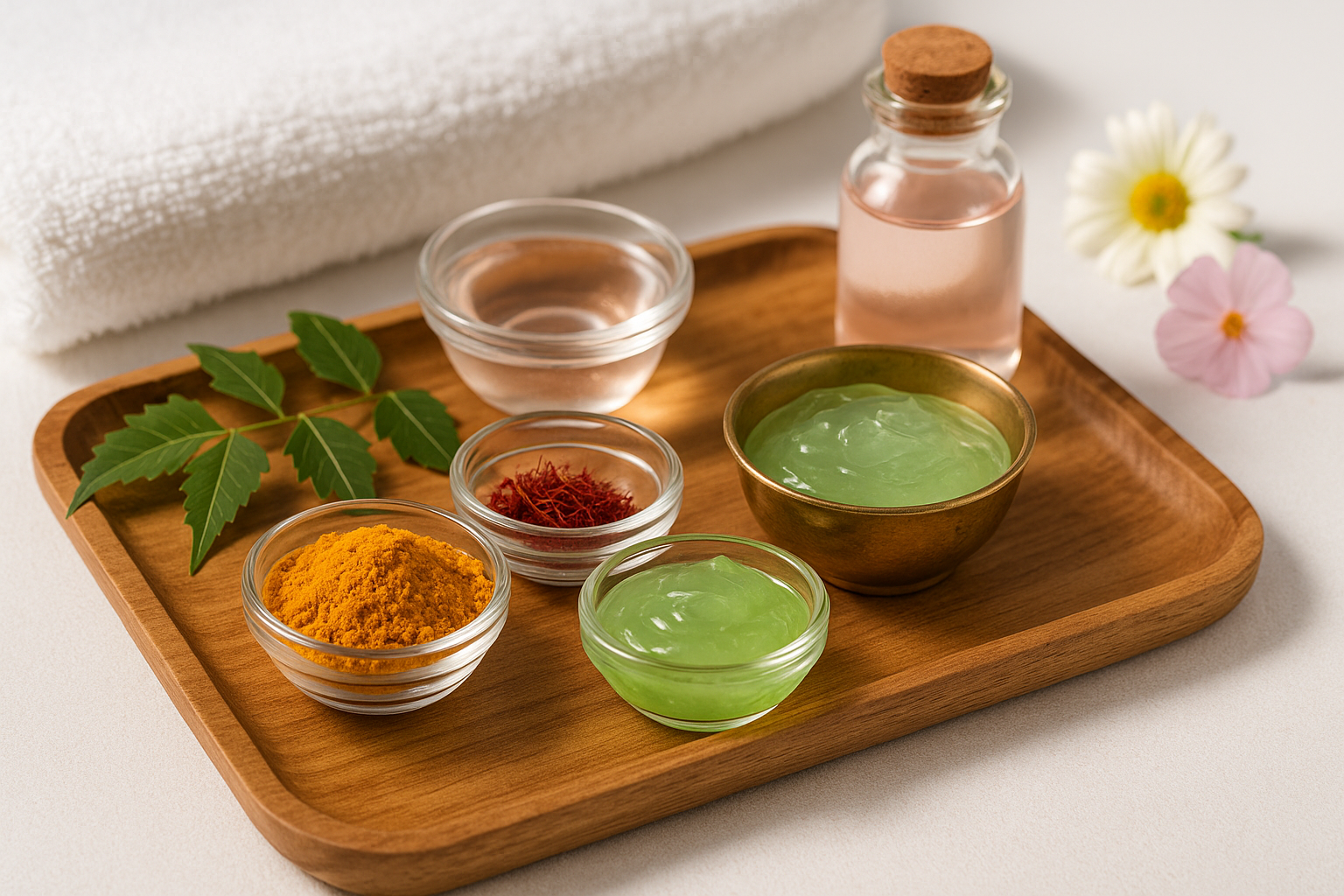
- A practical DIY is neem face pack recipe for oily skin, made by mixing neem powder with rose water. This acts as both a cleanser and toner, especially for acne-prone individuals.

Amla (Indian Gooseberry)
- Amla for skin glowing is one of Ayurveda’s most popular recommendations. Packed with vitamin C and powerful antioxidants, amla combats pigmentation, tanning, and dullness.
- Benefits include:
- Fading dark spots and tanning.
- Boosting collagen for firmer skin.
- Restoring brightness and freshness.
- Preventing early wrinkles with its amla vitamin C antioxidant power.
- Consuming amla juice for glowing and youthful skin in Ayurveda daily is a trusted way to heal skin from within, while an herbal face mask for glow using amla pulp brightens externally. Together, neem, amla, and turmeric act as a holistic trio, offering anti-inflammatory, antibacterial, and antioxidant protection.

DIY Remedies: Face Packs & Internal Uses
Topical Remedies
- Turmeric + Honey Mask for Acne Scars: Mix 1 tsp turmeric with 1 tbsp honey. Apply for 15 minutes, rinse with lukewarm water.
- Neem Powder Face Pack: Combine neem powder with rose water into a paste. Apply to oily areas for 10–15 minutes.
- Amla Pulp Mask for Glow: Fresh amla pulp can be applied directly to skin to reduce dullness and tanning.
Internal Remedies
- Amla Juice: 20–30 ml on an empty stomach for daily rejuvenation.
- Turmeric Milk: Golden milk (with a pinch of black pepper for better absorption) works as a night-time skin and immunity booster.
- Neem Tea / Neem Water: Steep a few neem leaves in hot water, consume occasionally to purify blood.
Combining Herbs
Ayurveda often suggests combining herbs for stronger effects. Examples include:
- Ayurvedic remedy for dark spots using turmeric and neem — a paste to fade pigmentation.
- Best way to combine amla and turmeric for skin lightening — a morning tonic for even tone.
Such blends balance antibacterial, anti-inflammatory, and antioxidant benefits for holistic skincare.
3 Simple Ayurvedic Recipes You Can Try Now
Recipe 1: Turmeric-Honey Face Mask for Acne & Scars
1 tsp turmeric powder
1 tbsp raw honey, Mix well, apply on acne-prone areas, and leave for 15 minutes. Rinse with lukewarm water. Use 2–3 times weekly.

Recipe 2: Neem & Amla Glow Pack
- 1 tbsp neem powder
- 1 tbsp amla pulp/powder
- Rose water or yoghurt to mix
Make a smooth paste and apply for 20 minutes. Wash off for visibly brighter skin.

Recipe 3: Turmeric & Amla Drink
- ½ tsp turmeric powder
- 30 ml amla juice
- Pinch of black pepper + 1 tsp honey
- Mix in warm water and consume in the morning for natural glow from within.

Precautions, Side Effects, & Best Practices
Though safe, natural remedies still require care:
- Patch test before applying turmeric, neem, or amla masks.
- Limit frequency: masks 2–3 times weekly to avoid dryness.
- Select quality: Use organic powders, pure turmeric (kasturi for fewer stains), and fresh amla.
- When to avoid: If you have open wounds, strong allergies, or are pregnant (especially neem internally).
- Consistency matters: Results appear gradually, usually within 3–4 weeks.
By following these practices, these Ayurvedic skin remedies remain both safe and effective.
Frequently Asked Questions
Does turmeric make skin yellow permanently?
No, turmeric may leave a temporary yellow stain but it fades quickly. Using kasturi turmeric reduces staining.
Can I use these remedies daily?
Turmeric and neem face packs are best used 2–3 times a week; amla juice can be taken daily.
Will these herbs work for all skin tones?
Yes, they promote herbal face masks for glow and even tone across all complexions.
How long to see results?
With consistent use, improvements in acne and glow are noticeable within 3–4 weeks.
Conclusion
From acne control to pigmentation repair, turmeric benefits skin, neem skin benefits acne-prone types, and amla for skin glowing supports youthfulness. Together, they represent holistic Ayurvedic skin remedies that brighten naturally, heal deeply, and protect long-term. Start with one mask or drink, stay consistent, and let Ayurveda bring your skin back to balance. Try one recipe, observe over a few weeks, share feedback, next reading suggestions.